
Avant-Garde Actants across In/Visible Ecologies
3–5 September 2026
BNMW
TOP Lab Berlin
Schätzelbergstraße 1–3 / Industriestrasse 40 12099 Berlin – Tempelhof

As part of Berlin New Media Week 2026, TOP Lab presents ROOT/CLOUD, a three-day exhibition and public programme featuring Tanja Vujinović and Kexin Wang, curated by Xristina Sarli.
ROOT/CLOUD moves between two interconnected strata.
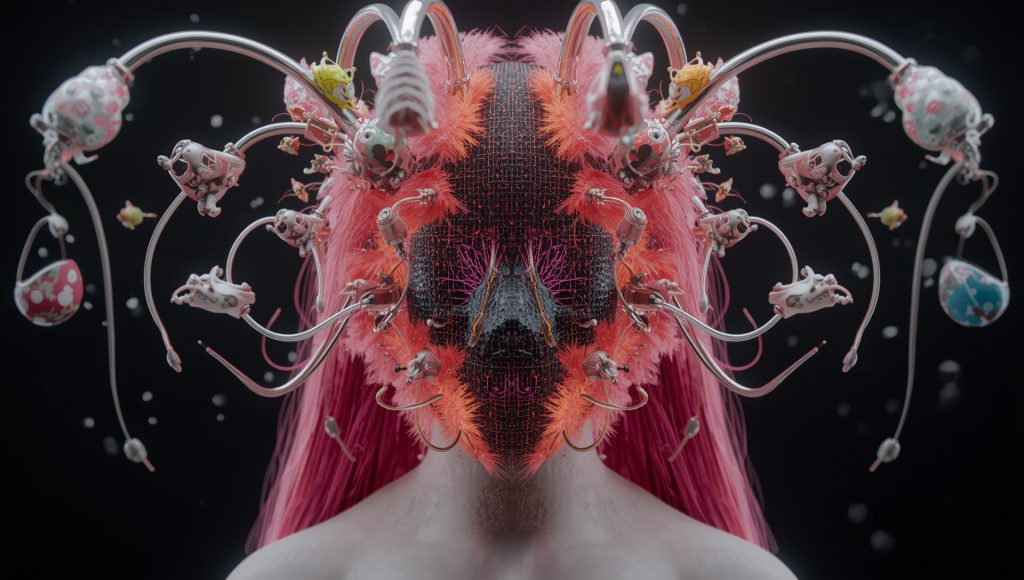
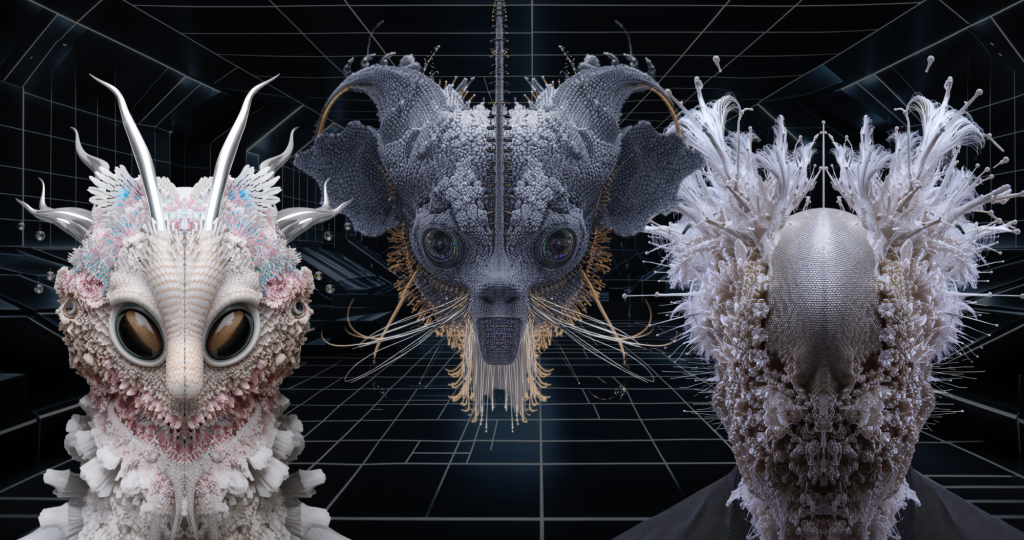
CLOUD unfolds through Tanja Vujinović’s AVANTGUARDIANS: virtual environments, moving images, extinct anatomies, artificial organisms and speculative habitats shaped by ecological memory.
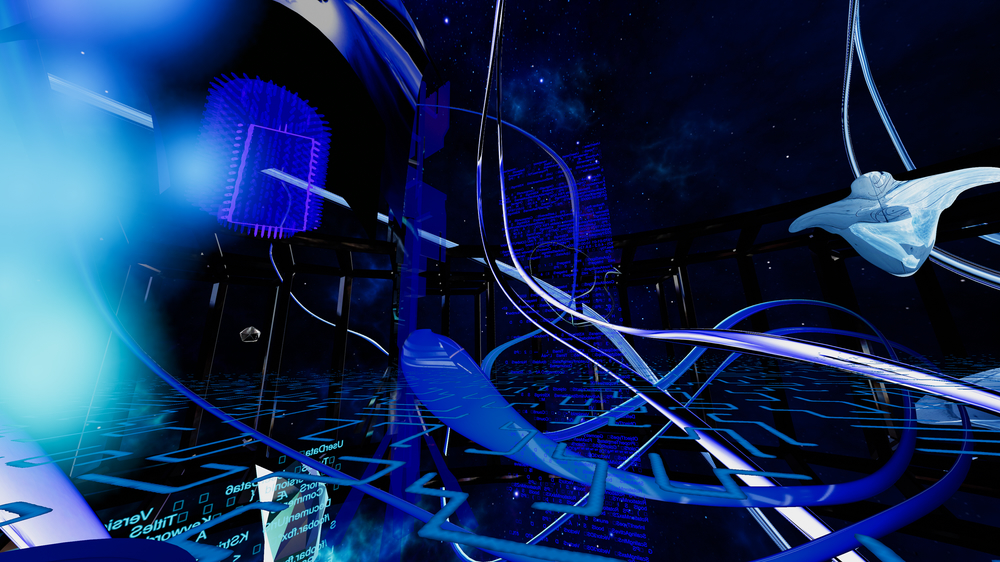
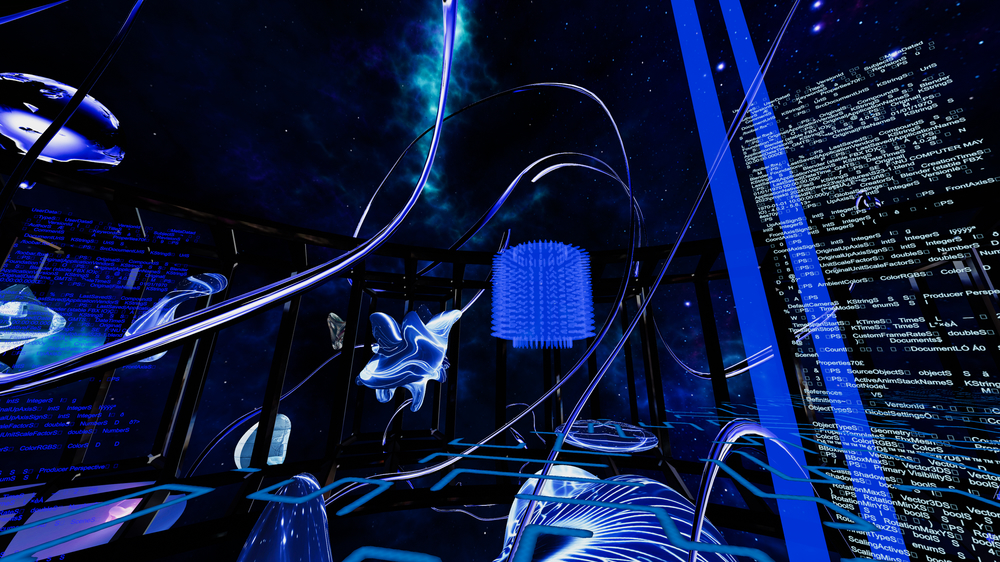
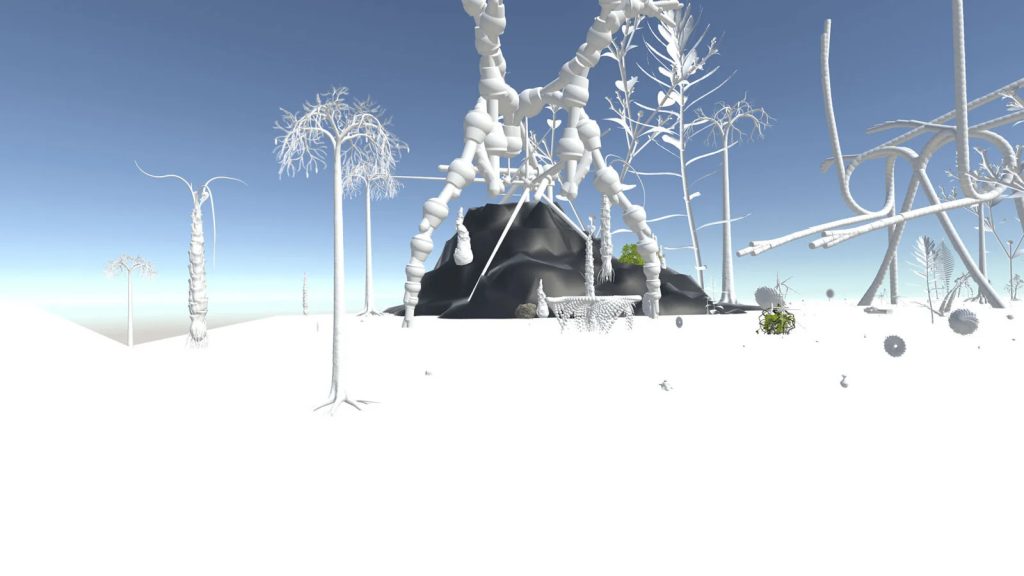
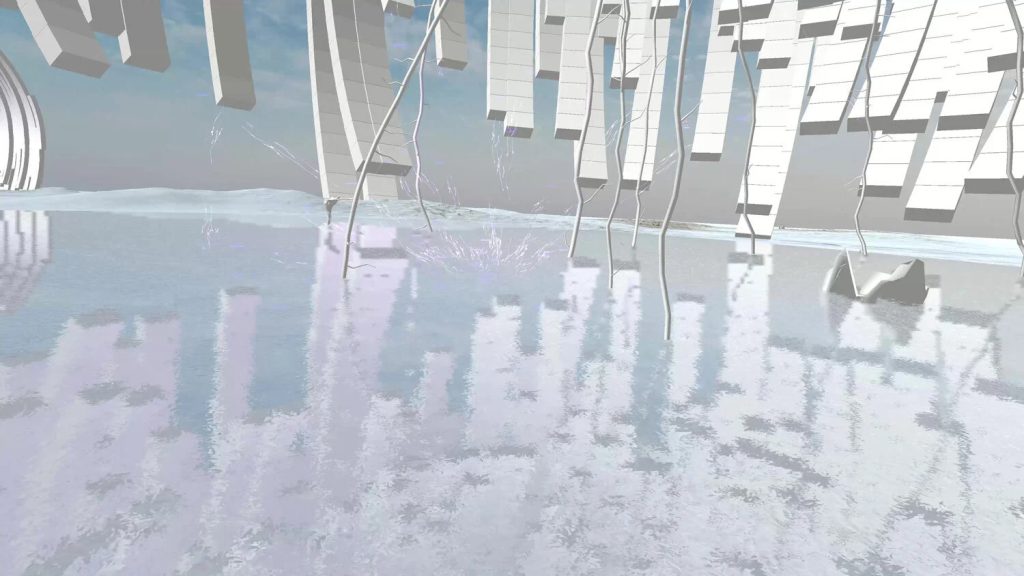
In AVANTGUARDIANS, extinct anatomies return as contemporary digital beings. Botanical structures, fossils, corals, fungi, cephalopods and microorganisms become source material for artificial organisms, composite bodies and speculative habitats.
Rather than reconstructing nature, Tanja Vujinović asks how unfamiliar species might emerge through biological observation, computation and synthetic image systems.
The presentation brings together works from AVANTGUARDIANS, ONENESS and BLOOM, alongside passages through the virtual worlds of AVANTGARDEN. Across moving images and digital environments, forms hover between organism, sculpture, avatar and landscape.
Virtual space becomes a laboratory for ecological imagination: a place where biological memory, extinct bodies and computation can generate new relationships between living and synthetic systems.
Tanja Vujinović is a multimedia artist working across virtual worlds, moving image, sculpture, sound and synthetic image systems. Her work develops artificial organisms, speculative habitats and parallel worlds where biology, technology and imagination continuously overlap. Working with 3D environments, virtual reality, generative image systems and audiovisual installations, she constructs living ecologies populated by avatars, proto-machines and synthetic species. Her work has been exhibited internationally in museums, galleries and festivals for over two decades. Her practice draws on art history, the natural world, science, and popular culture.
ROOT descends into TOP Lab’s basement biolab with Kexin Wang’s Mycelian — Light-Guided Living Fungal Prints, a living installation in which neural cellular automata and dynamic light attempt to guide fungal growth in real time.
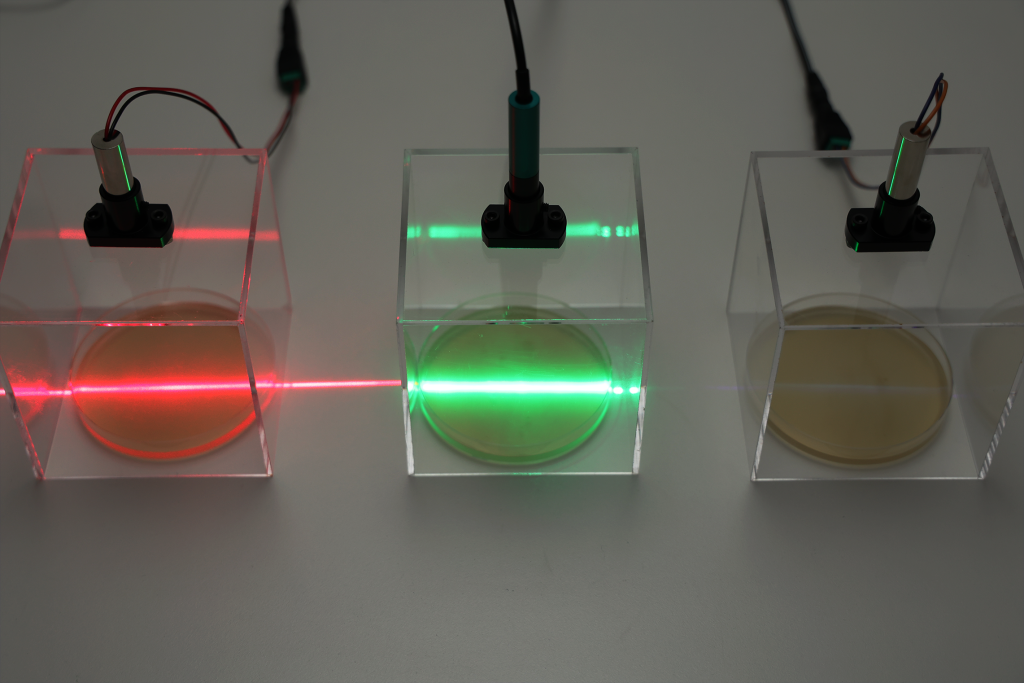
Mycelian: Light-Guided Living Fungal Prints
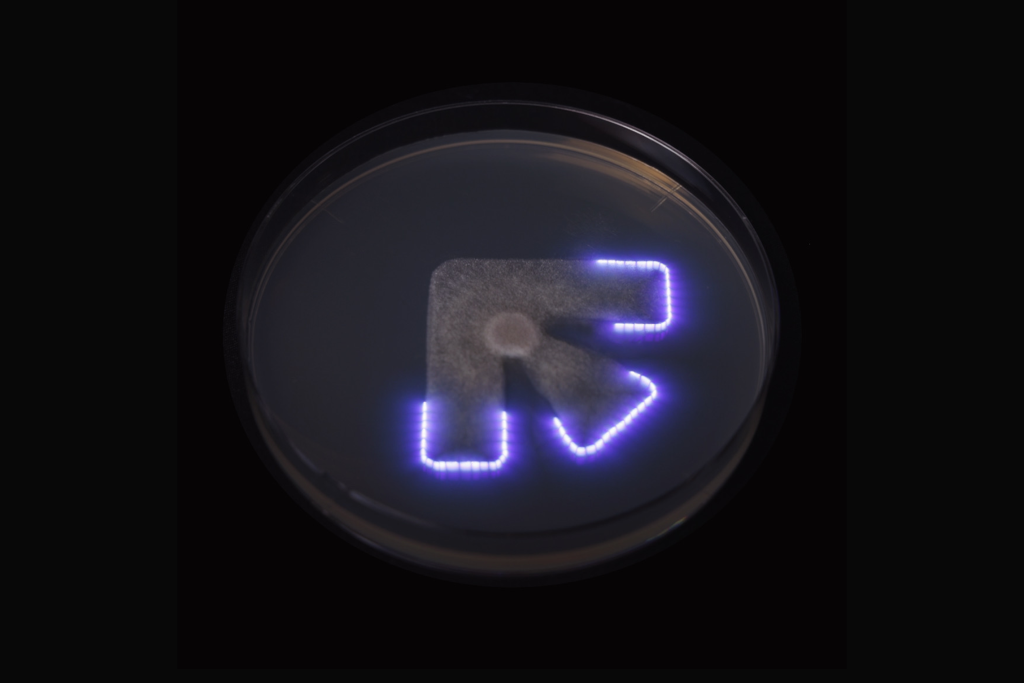
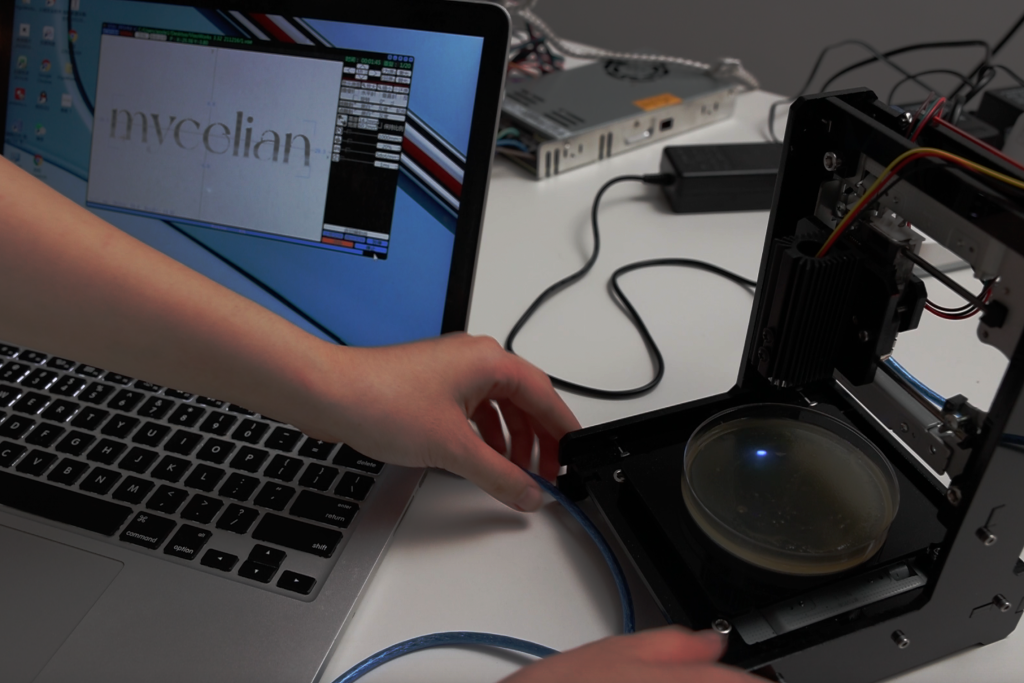
Mycelian is a live bioart installation that uses light and AI to guide living fungal growth into custom patterns in real time. At its core, the work asks a simple question: what if light could be a language between humans and fungi?
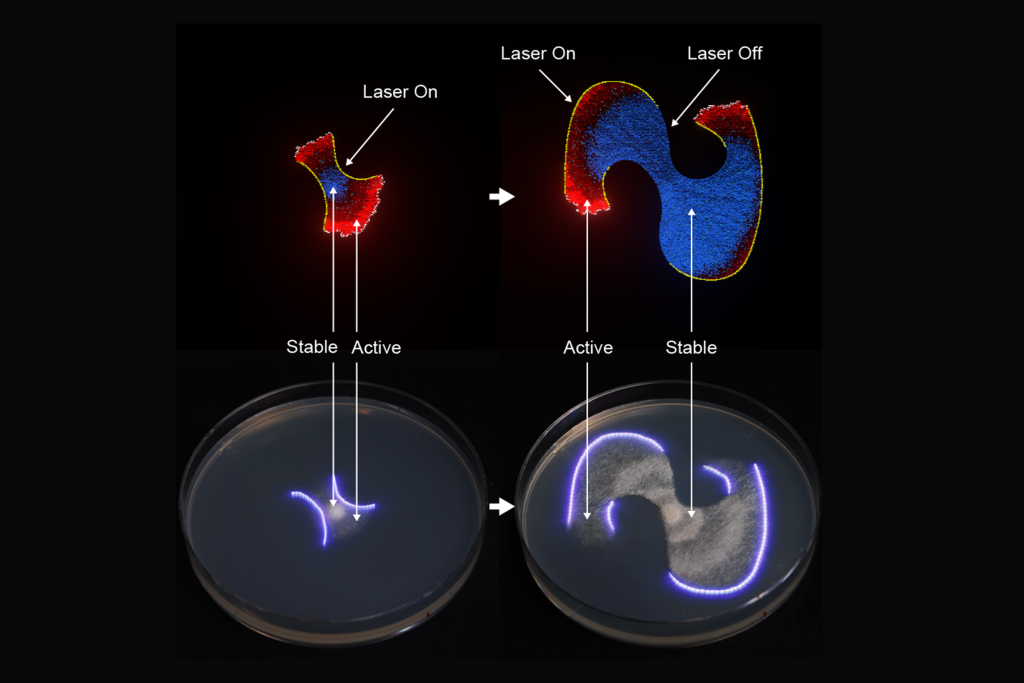
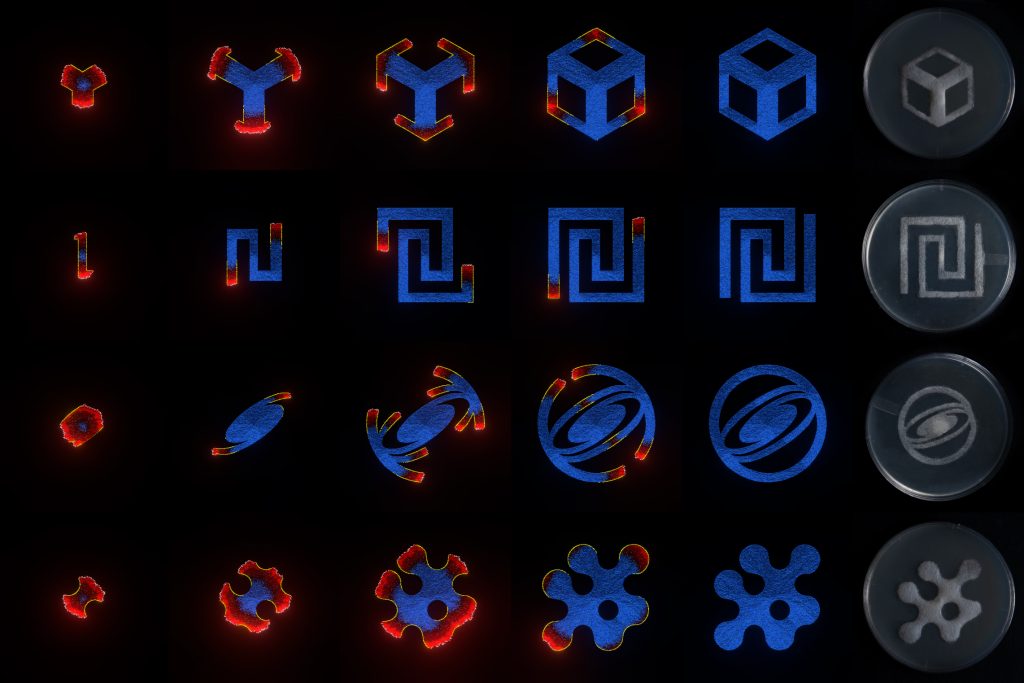
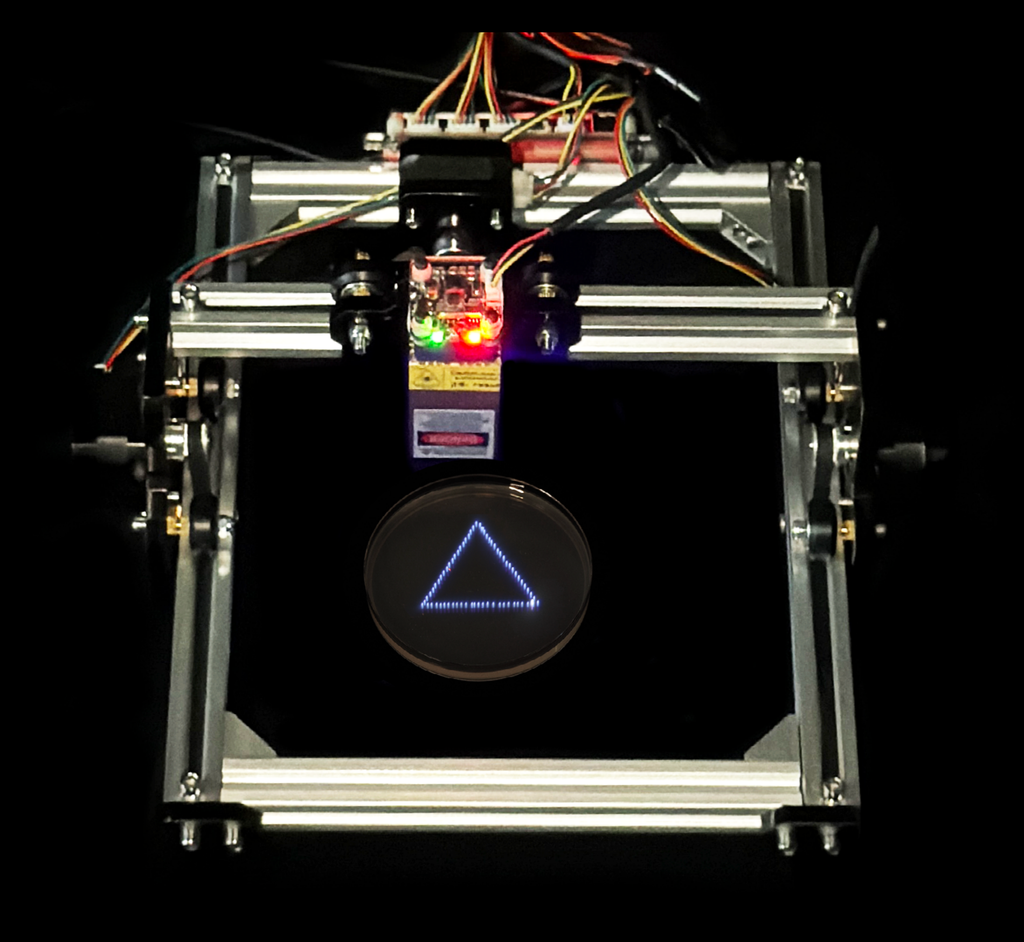
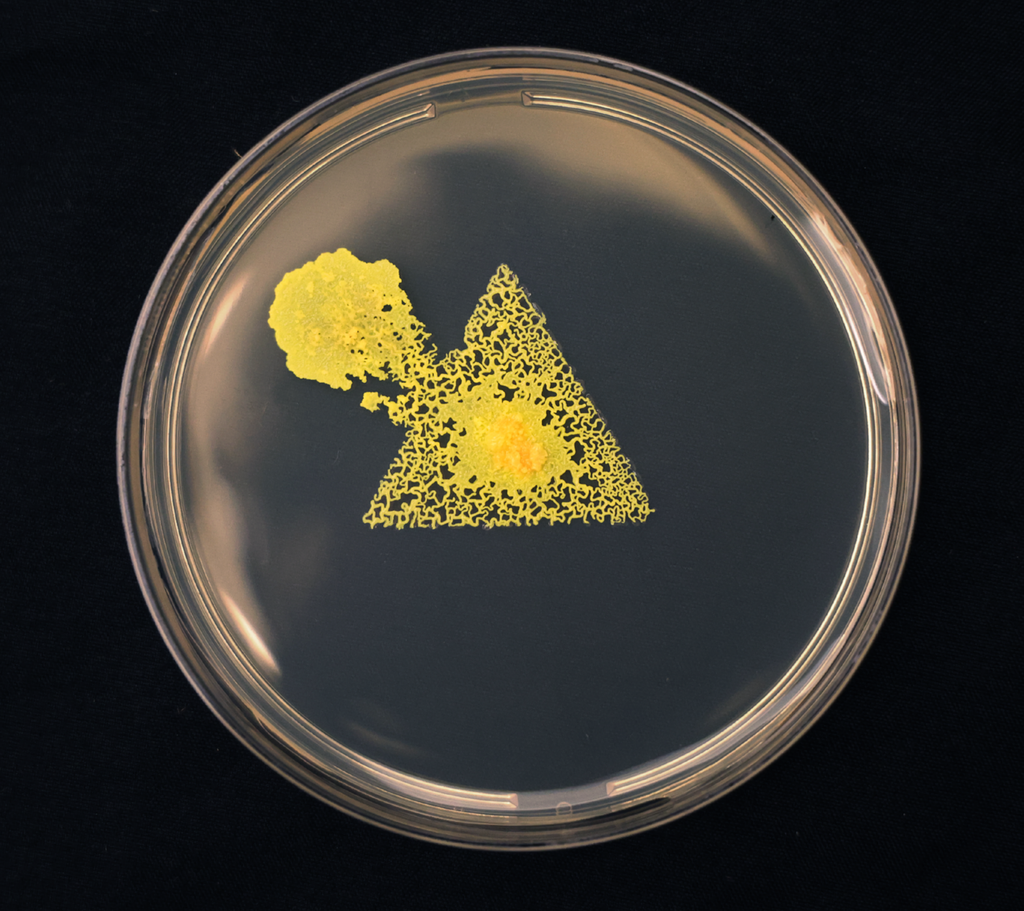
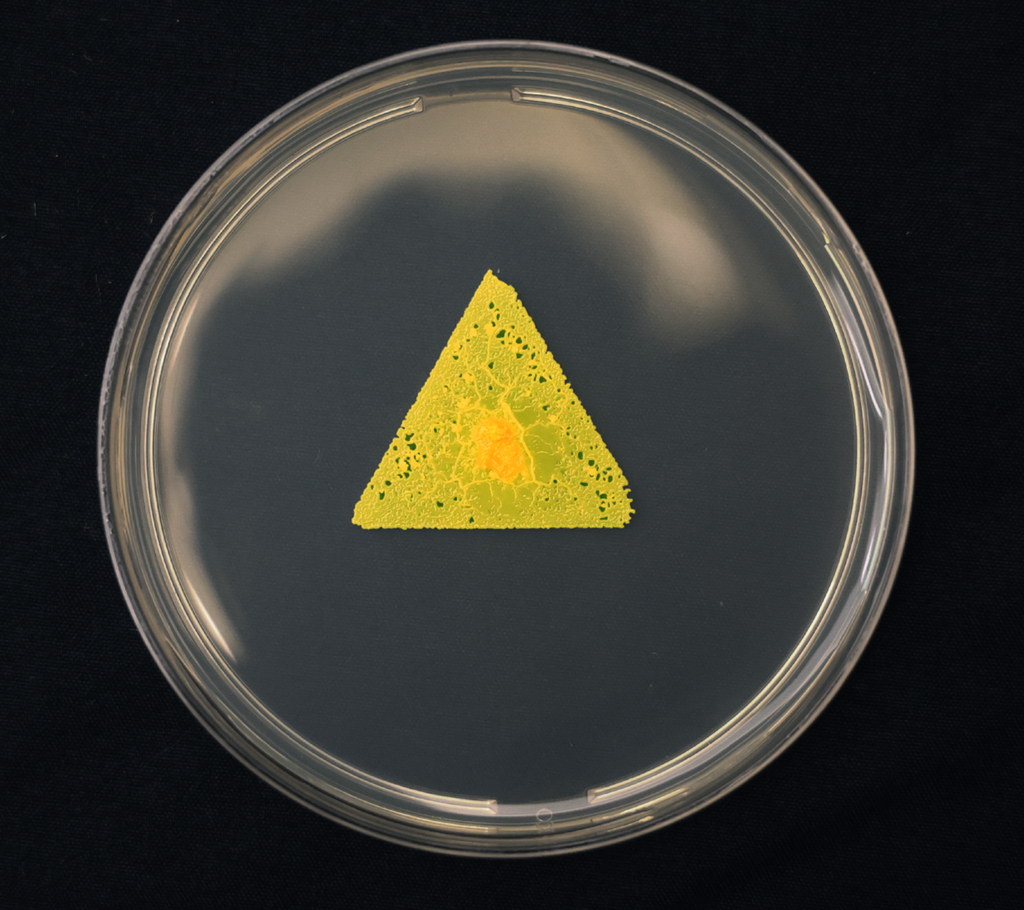
Certain fungal strains are photosensitive: they avoid light and grow freely in darkness. Mycelian exploits this biological behavior by projecting a laser pattern onto an inoculated agar plate. The fungus reads the light as a boundary and grows precisely around it, filling only the dark areas. The result is a living print, not drawn, not printed, but grown.
The growth behavior is predicted by a neural cellular automata model trained on real fungal data, allowing visitors to see both the AI simulation and the living result side by side. The simulation shows what the fungus is expected to do; the petri dish shows what it actually does. Sometimes they match perfectly. Sometimes the organism surprises us.
Visitors are invited to choose or design a pattern, watch the light write the boundary onto the dish, and observe the fungus begin to respond. Because fungal growth unfolds over hours, the installation captures time as a medium: the work is never finished during the visit, but always becoming.
Mycelian sits at the intersection of bioart, AI, and complex systems, making the invisible logic of living systems visible, interactive, and open to anyone. It raises questions about authorship, control, and co-creation: who is the artist when a living organism completes the work? What does it mean to give an instruction to something that is alive?
The underlying research was peer-reviewed and published at SIGGRAPH Asia 2024, and has been presented at MIT’s Arts, Culture & Technology program and the Biofabricate Global Summit. Since its launch, Mycelian has been adopted by bioart labs, artist studios, and creative brands across Europe, the US and beyond, drawn by the unique intersection of biology, light, and computation it represents. For this exhibition, the live installation replaces the mold used in earlier versions with Physarum polycephalum, a slime mold whose much faster growth lets visitors watch the organism respond to light within the span of a visit.
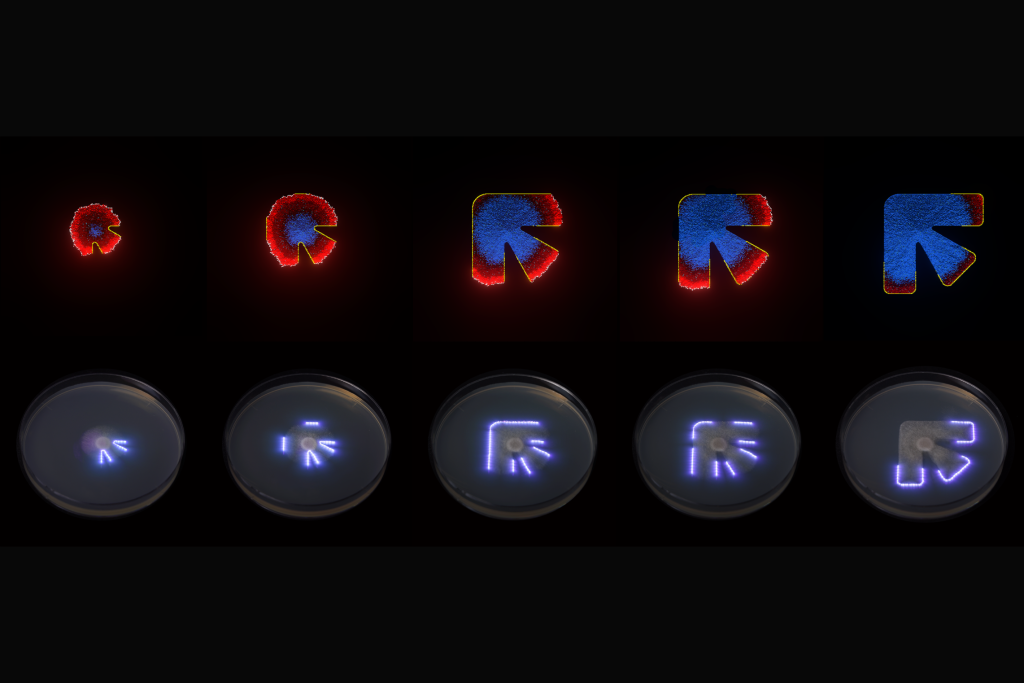
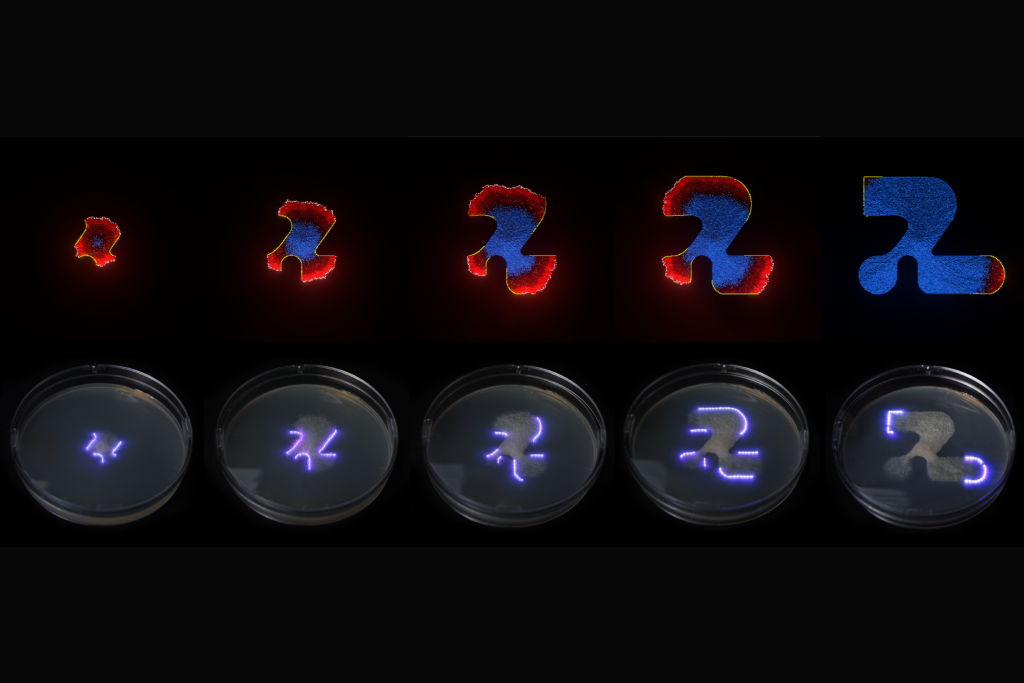
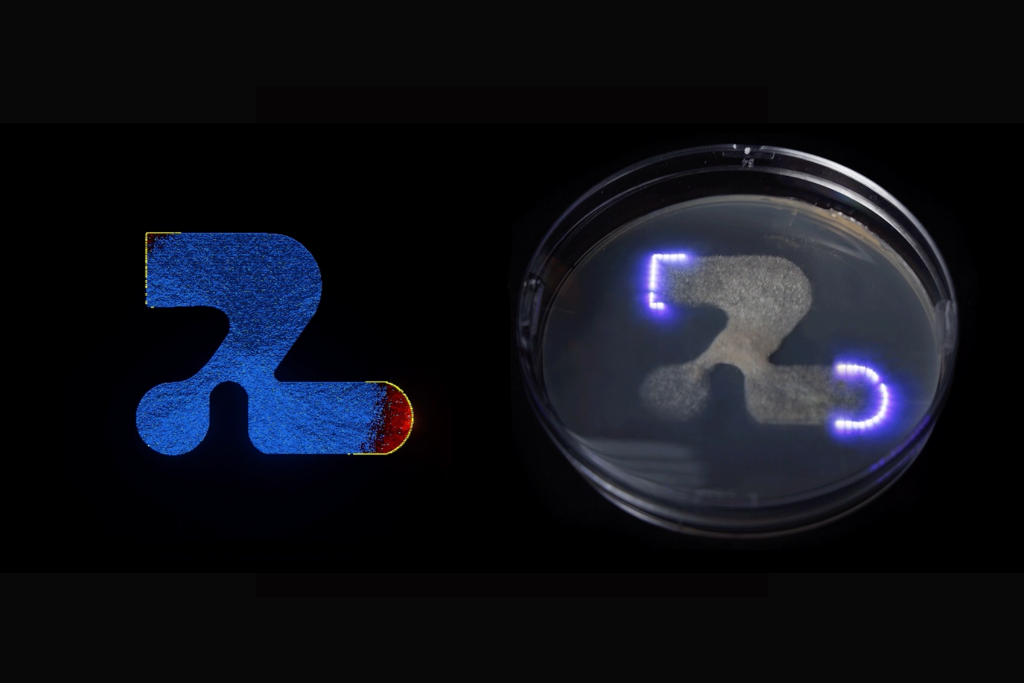
Biocompiler: Problems Written in Light, Answers Grown in Slime
Biocompiler is a live bioart installation that writes mathematical problems into light and lets a living organism solve them. At its core, the work asks a simple question: if a machine can pose a question, what happens when the thing that answers is alive?
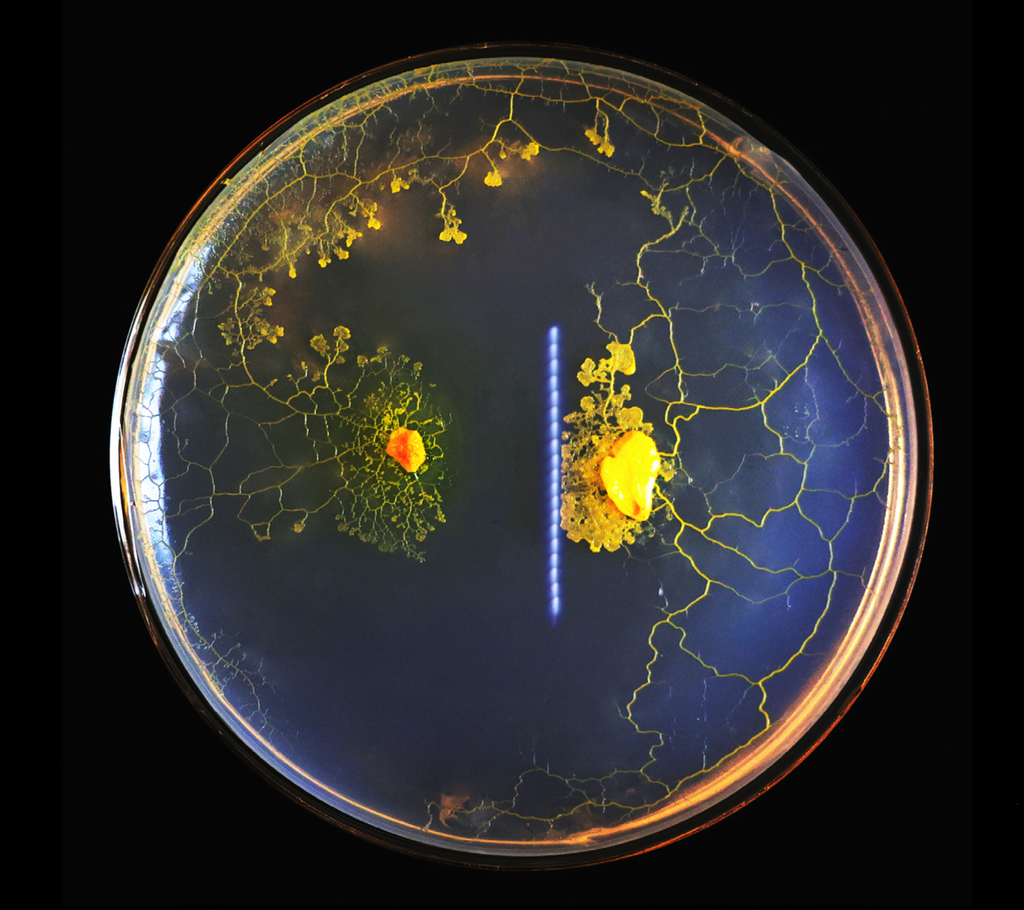
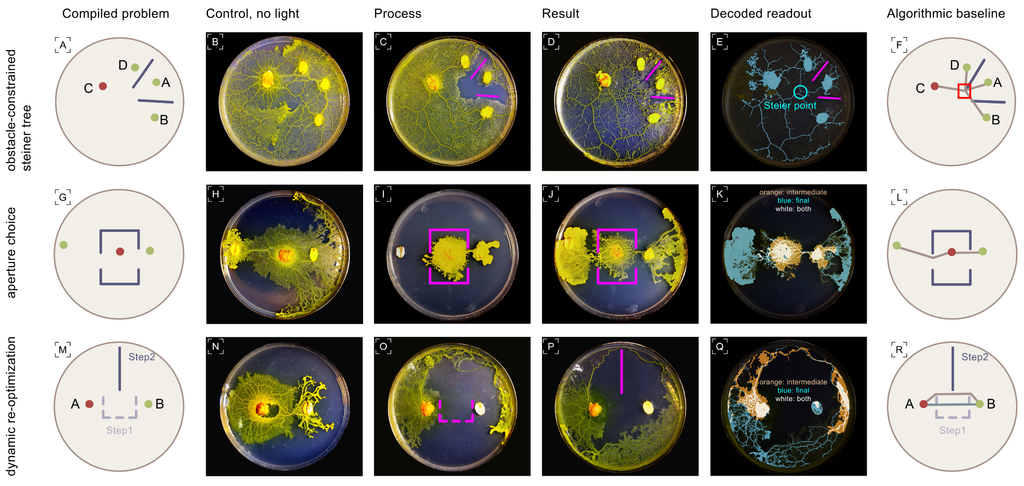
Physarum polycephalum, a single-celled slime mold with no brain and no nervous system, retreats from light and reaches toward food. Biocompiler turns that reflex into a language. A laser mounted on a programmable motion platform scans walls of light onto an agar plate, walls that exist only for as long as the beam keeps redrawing them, faster than the organism can slip across an unlit gap. Oat flakes mark the destinations. The organism cannot cross the light, so it has to find its own way: which side of a barrier to pass, which opening in a wall to take, how thick to make each vein once the route is chosen. The shape it grows is the answer.
The system runs in three movements: compile, compute, decode. A generator produces a problem and screens it for solvability, then the machine compiles it into scan paths and writes it onto the dish as light. The slime mold computes, over hours, by growing. A camera and a computer vision pipeline then read the resulting body back out as a graph of nodes, edges, lengths and widths, a machine-readable answer to the question the light asked. Beside it, a classical algorithm solves the same instance exactly. Sometimes the two agree. Sometimes the organism takes a longer route, hugs the rim of the plate, or commits to a path no shortest-path algorithm would choose. Those disagreements are not errors, they are the data. They become training records for models that learn how a living solver differs from an optimal one.
Visitors are invited to generate a problem, watch the laser inscribe it onto the dish, and see the organism begin to feel its way around walls whose far side it cannot know. Mid-solve, a wall can be erased and redrawn somewhere else, the question rewritten while the answer is still being written. The slime mold notices, hesitates, and re-plans. Because growth unfolds over hours, the installation takes time as its medium: the work is never finished during a visit, only underway.
Biocompiler sits at the intersection of bioart, computation, and digital fabrication, making visible a form of problem-solving that has no symbols, no memory, and no internal representation of the problem it is solving, only a body adapting to its surroundings. It raises questions about what counts as computing, and who is doing it. When a laser writes the constraint and a slime mold writes the solution, where does the calculation actually happen? What does it mean to compile a problem into something that is alive, and to accept the answer it gives?
The underlying research was developed at MIT CSAIL, with collaborators from MIT Media Lab, MIT Center for Bits and Atoms, UC Berkeley, and Helmut-Schmidt-Universität. It builds on the light-containment method peer-reviewed and published at SIGGRAPH Asia 2024, which used dynamic laser boundaries to confine fungal growth into designed patterns. Biocompiler keeps the light but changes its purpose: no longer a mold for a shape, but a question posed to a living thing.
Kexin Wang is a researcher, artist, and educator. She conducts research at MIT CSAIL and holds a master’s degree from Brown University and the Rhode Island School of Design. She is the founder of Cultigen, an AI-powered curriculum platform, and FunguyLab, a bioart education brand, dedicated to turning frontier technologies into courses accessible to everyone, in the belief that access to technology should be a right rather than a privilege. Her practice spans biology, optics, artificial intelligence, and digital fabrication, driven by a long-standing fascination with non-human agency and the aesthetics of emergence. Her work includes a light-guided bio-printer, a natural language interface for guiding artificial life evolution, and an automated system that captures the physical problem-solving of living organisms as training data for machine learning models. Her research has been published at leading academic venues including SIGGRAPH Asia, CHI, and UIST, and her work has been exhibited in Boston, Venice, Auckland, and Shanghai.
Together, the works ask:
If the avant-garde once claimed to lead society towards the future, what happens when that future is co-produced by fungi, algorithms, extinct organisms, technological systems and speculative species?


The cloud has roots. The underground is already computational.
PROGRAMME
3 SEPTEMBER · 18:00-22:00
19:00 OPENING + DISCUSSION
WHO LEADS THE AVANT-GARDE?
Actants, Artificial Organisms and Living Networks
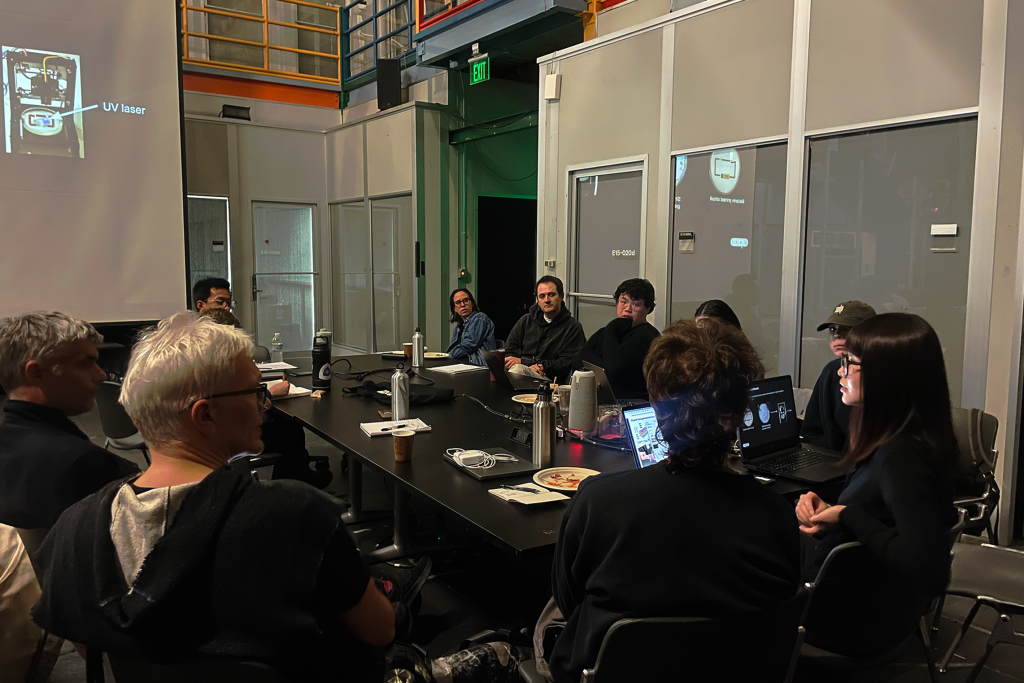
A conversation with Tanja Vujinović, Kexin Wang and curator Xristina Sarli on more-than-human agency, artificial life, ecological memory and the displacement of the human from the centre of authorship.
4 SEPTEMBER · 18:00-00:00
ARTIST TALKS
19:00 · CLOUD
Tanja Vujinović presents AVANTGUARDIANS and her wider practice across virtual worlds, synthetic organisms and speculative ecologies.
20:00 · ROOT
Kexin Wang presents Mycelian and her research across bioart, AI, optics and living systems.
5 SEPTEMBER · SOS — OPEN STUDIOS 14:00-00:00
ROOT/CLOUD becomes part of SOS — Open Studios. Artists, studios and independent project spaces throughout Zebrahaus open their doors, allowing visitors to encounter the wider creative ecology inhabiting the historic industrial complex.
18:00 · TOUR
ZEBRAHAUS ARTISTS
Annika Hippler @annika.hippler
Oleksii Zolotar @zolotar__o
Sandra Schlipkoeter @sandraschlipkoeter
Sonja Nilsson @sonja.nilsson
DJ SET 20:00-22:00 · solito caleb
solito caleb is an artist based in Berlin, moving between leftfield electronics, UK forward club-bass sounds. Co-founder of the RAPSODICA project, placing sound and visual work in unconventional spaces. Their sets lean patient and physical, built for systems and ever scattery.
FREE ENTRY
SOS programme and participating spaces:
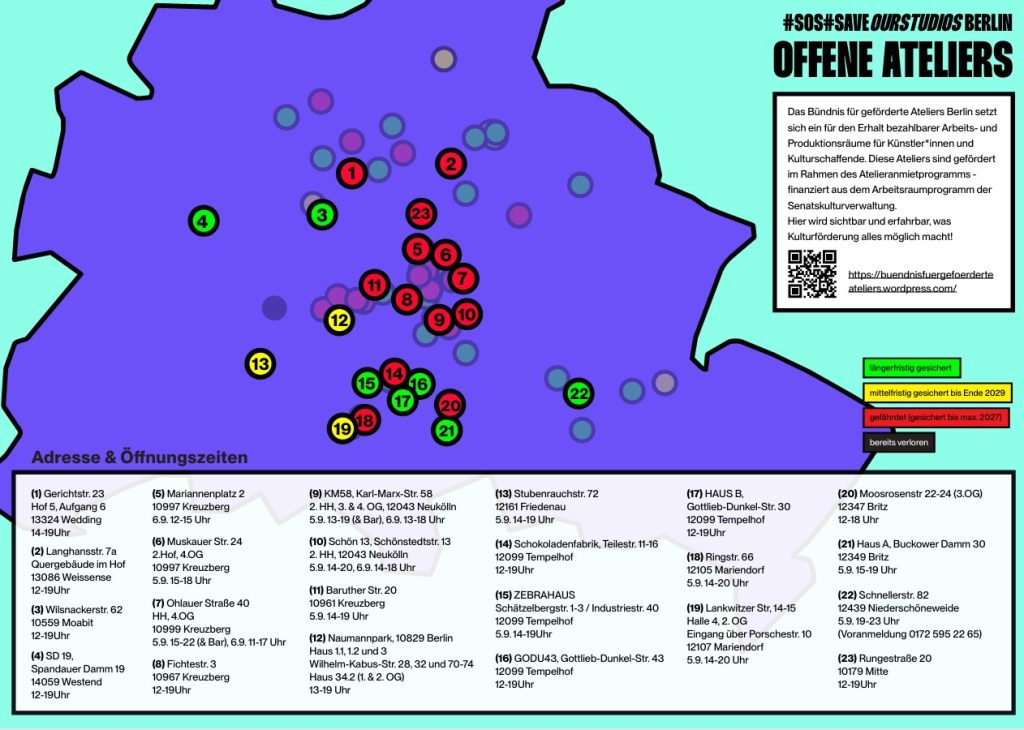
SOS — Open Studios is initiated by the Bündnis für geförderte Ateliers Berlin, an alliance representing publicly funded studio buildings currently threatened by rising commercial rents, expiring leases and cuts to Berlin’s cultural budget. Through collective advocacy and public events, the alliance campaigns for the preservation and expansion of affordable, securely tenured working and production spaces for artists.